+1 713-364-2938
 info@availaestheticsmd.com



Sample Page
5 Surprising Botox Uses: From Migraines to Excessive Sweating

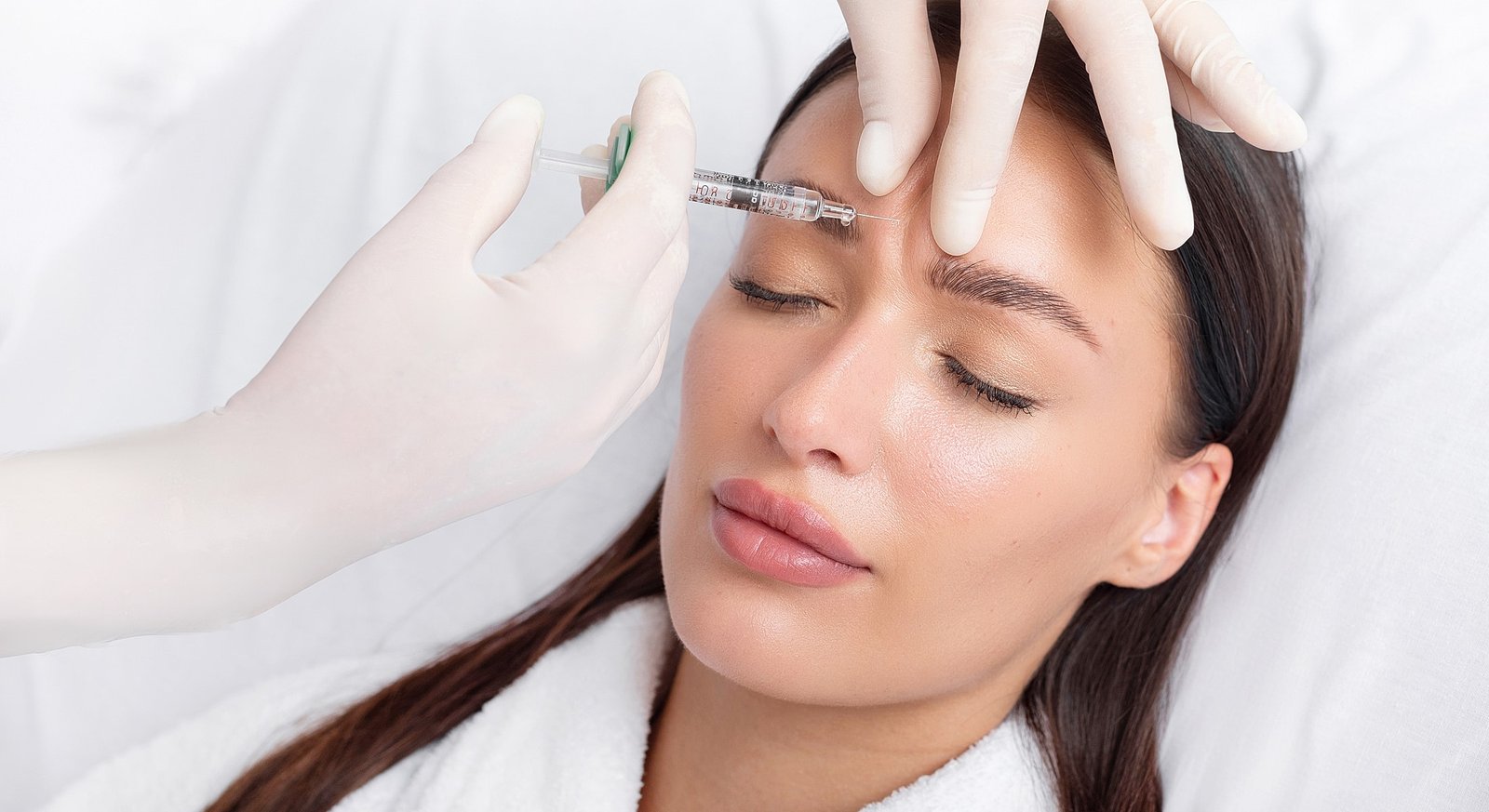
Most people who hear the word Botox think instantly of fewer wrinkles and smoother skin. This is certainly one of its most famous advantages, but it’s far from the only one. Botox has proven to be a trusted treatment choice for many health concerns that can affect quality of life, confidence and comfort over the years. The FDA recommends Botox uses for a range of cosmetic and therapeutic applications, including chronic migraines and excessive underarm sweating. Botox has also been endorsed by Health Canada for several indications, underscoring its well-established safety profile when administered by qualified health care professionals. These approvals have brought relief to millions of people struggling with problems that reach far beyond looks.
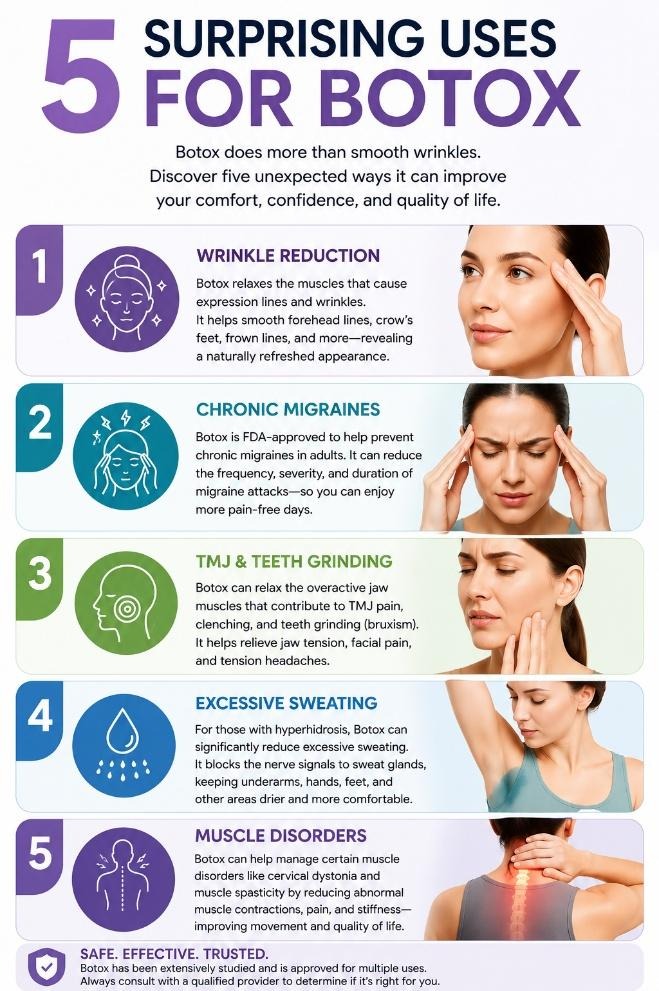
If you’ve ever wondered what else is Botox used for, you’re not alone. In this article, we’ll explore five surprising uses for Botox, explain how the treatment works, and help you understand whether it may be the right option for your needs.
How Does Botox Work?
Botox is a purified protein that blocks communication between nerves and specific muscles or glands. This temporarily reduces unwanted muscle activity or limits signals that trigger excessive sweating and certain types of pain. Because its effects are temporary, treatments are usually repeated every three to six months, depending on the area being treated.
The actual procedure is short, involves very little downtime, and most people are back to their normal routine shortly afterwards. The results progress over several days, and the full effect is generally seen in two weeks.
Softening Fine Lines and Wrinkles
Although this is its best-known application, it’s still worth mentioning because wrinkle treatment remains one of the most common reasons people choose Botox.
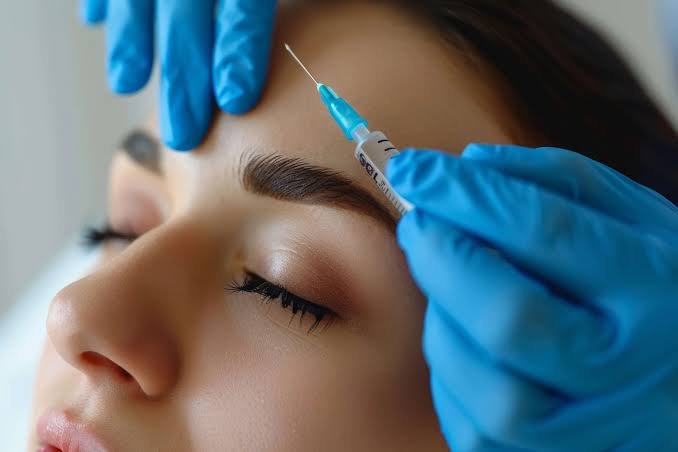
Repeated facial expressions can gradually create expression lines. Botox relaxes the muscles that cause these movements, and smooths the skin above them.
Common treatment areas include:
- Forehead lines
- Frown lines between the eyebrows
- Crow’s feet
- Bunny lines on the nose
- Chin dimpling
- Neck bands
Botox for Migraines :
- Many people are surprised to learn that Botox for migraines is an FDA-approved medical treatment.
- It is specifically meant for adults with chronic migraine, defined as headaches. Botox is for those who have headaches occurring for at least 15 or more days each month and have symptoms of migraine on at least eight of those days.
- Researchers believe Botox works by blocking pain-signalling chemicals before they reach the brain.
- A series of small injections is administered around the forehead, temples, back of the head, neck, and shoulders.
Botox for TMJ :
If you frequently experience jaw pain, headaches, or sore facial muscles, your jaw may be working harder than it should. Teeth grinding, or bruxism, is associated with temporomandibular joint (TMJ) disorders and can place significant strain on the muscles responsible for chewing.
People with hyperactive jaw muscles should consider Botox for TMJ. Jaw muscles, when relaxed, reduce headaches, clenching-related pain, and associated facial tension. While Botox does not fix the problem permanently, it does treat the symptoms and offers temporary relief from TMJ disorders.
Botox for Hyperhidrosis (Excessive Sweating)
We all know that sweat regulates body temperature. However, for some, the process becomes excessive and interferes with their daily functioning. Excessive sweating is called hyperhidrosis, in which a person feels constantly damp and experiences sweat and sweat marks, even with minimal activity and in cool conditions. It can be very embarrassing.
One of the most impressive and surprising uses for Botox is its ability to reduce hyperhidrosis. It temporarily stops the nerve signals that stimulate the sweat glands, providing relief. The treatment is most commonly performed on the underarms, although it may also be suitable for the hands, feet, and forehead.
The International Hyperhidrosis Society estimates that around 385 million people worldwide live with hyperhidrosis, yet many never seek treatment because they assume nothing can be done.
Common treatment areas include:
- Underarms
- Palms
- Soles of the feet
- Forehead
Helping with Neck Muscle Spasms
Another answer to the question “what else is Botox used for” involves relieving painful neck muscle spasms. Some people develop involuntary muscle contractions that cause the head to twist or tilt into uncomfortable positions, making everyday activities difficult.
Botox helps by relaxing the affected muscles, reducing stiffness, and improving movement. Health Canada and the FDA recognize Botox as a treatment option for certain muscle disorders in which unwanted muscle contractions affect daily functioning. Although not everyone requires this type of treatment, it demonstrates just how versatile Botox has become over the years.
Cosmetic and Therapeutic Uses at a Glance
| Cosmetic Uses | Therapeutic Uses |
| Forehead lines | Chronic migraines |
| Crow’s feet | Excessive sweating (hyperhidrosis) |
| Frown lines | TMJ-related muscle tension (off-label) |
| Chin dimpling | Neck muscle spasms |
| Neck bands | Certain muscle movement disorders |
Is Botox Right for You?

Botox is not a one-size-fits-all treatment, which is why an individual consultation is so important. During your appointment, your provider will discuss your concerns, review your health history, and determine whether Botox is the most appropriate option for your goals.
- You might be a good candidate for Botox if:
- Want to reduce expression lines but allow natural movement of the face.
- Have chronic migraines, excessive sweating, jaw clenching or muscle tension that interferes with your daily life.
Seek out a minimally invasive procedure with minimal downtime.
Choosing an experienced provider also helps ensure the correct muscles are treated, reducing the likelihood of unwanted side effects while achieving natural-looking results.
What Should You Expect After Treatment?
Generally, a Botox procedure lasts less than 30 minutes. Post-procedural redness and mild swelling are common. However, this subsides within a couple of hours, and you will see the results of the procedure within three to seven days, with the effect fully unfolding after two weeks.
The effects are temporary. That is why follow-up treatments are recommended to maintain consistent results. Outcomes typically last between three and six months, depending on the area being treated.
| Treatment Area | Typical Duration of Results |
| Facial wrinkles | 3–4 months |
| Chronic migraines | About 12 weeks |
| TMJ | 3–4 months |
| Hyperhidrosis | 6–9 months |
| Neck muscle spasms | Around 3 months |
Conclusion
Botox is not just for wrinkle treatment. Today, it is recognized for helping people manage concerns ranging from chronic migraines and excessive sweating to jaw tension and neck muscle spasms. Understanding these surprising uses for Botox allows patients to explore treatment options they may never have considered before.
If you are seeking Botox services Katy, Texas, choosing a skilled and certified practitioner is important. To address your specific concern, a customized treatment plan is recommended.
Frequently Asked Questions
In addition to minimizing wrinkles, Botox is often used to treat chronic migraines, excessive sweating, TMJ tension, and certain disorders that prevent normal movement.
Some of the most common Botox uses besides wrinkles include treating chronic migraines, hyperhidrosis, jaw clenching associated with TMJ, and neck muscle spasms.
Botox is approved by Health Canada as preventive therapy for those who are suffering from chronic migraines. Several patients have benefited from consistent treatment sessions.
No, results are temporary and typically last between six and nine months before another treatment is needed.
For many people, Botox for TMJ can reduce jaw tension, teeth grinding, and muscle-related discomfort. Reach out to your provider to determine whether it is appropriate for your individual situation.